The post Let’s Connect! appeared first on General Computer Consulting, LLC.
]]>
Paul General
Phone: (412)853-3708 x 007
Email: paul@gcchelp.com

The post Let’s Connect! appeared first on General Computer Consulting, LLC.
]]>The post Five Major Trends in Data Center Cabling appeared first on General Computer Consulting, LLC.
]]>
As economic pressures continue to bear down on organizations, ways to improving the facilities and processes to create efficiencies and reducing costs are constantly on leaders’ mind. One area that is getting a lot of attention is the data center. Earlier, data center were viewed as a place to house data and provide reliable services for businesses. But nowadays, the typical data center is overprovisioned, inefficient, and underutilized.
However, the recent trends in data center designs and operations are aimed at increasing efficiencies and mitigating risks. This certainly saves companies from spending more on operating costs. Given enterprise dependencies on high-end structure data cabling, it is telecommunication, data transmission and storage, software support, on-going maintenance, data backups, and back-end functions such as system update and monitoring that are on the top of the priority list. According to the survey conducted by MarketsandMarkets, by 2020, the structured-cabling market will be worth $13 billion plus which means the structured cabling will employ fully virtualized network architecture.
Let’s take a deeper look at the five important trends in data center cabling:
- Modularisation in new data centers: Transition to new data center construction that supports the demands of superior networking capabilities is considered to be one of the most notable trends that affect structured cabling. In fact, the organizations’ involvement at an initial stage or at the construction phase will help them make important decisions for data center cabling solutions. Getting involved at an early stage supports the scalability in data and resources, increases profits and also reduces overall infrastructure costs. Modular data centers that are specifically designed to meet the needs of organizations are portable, and employ unique pre-engineered modules and components while providing enough space to accommodate a converged infrastructure where “location” is a factor.
- Network Infrastructure Optimization: With the advent of copper and fiber technology, data center providers are becoming an economical way to integrate network infrastructure optimization. The massive amounts of data are collected, transformed, and delivered across the network demands a state-of-art network cabling solution. The system not only needs to support current data but also must accommodate for the future influx of data (Big Data) that will ultimately occur as the organization grows.
- Unified cloud initiatives: Cloud initiatives are certainly impacting the approach to network cabling as well. For instance, in an attempt to deliver rapid scalability, organizations implementing a private cloud infrastructure must deploy the physical network infrastructure before actual usage is needed. Therefore, it is important to lay a well thought out physical layer design that allows for a phased implementation approach that is crucial for the successful rapid deployment models.
- Network Virtualization Services: Network virtualization is when both hardware and software network resources are combined into software-based, single administrative body or virtual network. It is the combination of many networks or parts of networks or provides network-like functionality to the software container on a single system. The data center convergence allows servers, storage, and network infrastructure to be integrated, and thereby increases the efficiency and simplifying management, without sacrificing network reliability, and can be achieved through a fully virtualized network infrastructure.
- Data center convergence: This means creating a pool of virtualized server, networking capacity, and storage which are shared by multiple applications. The technique aims at reducing the footprints of all elements of a data center. One of the major benefits of data center convergence includes better alignment between IT projects and business objectives, which helps in gaining efficiency and advantage through IT responsiveness and incremental technological capabilities.
Whether you are exploring new B2B opportunities as a managed-services provider or moving to a cloud data center, data cabling is definitely creating a new era for high-end data centers. Although efficiency, cost-conscious solutions, performance, and scalability are important considerations, a well-planned structured data-cabling infrastructure is designed to strengthen the networking environment in preparation for change.
The post Five Major Trends in Data Center Cabling appeared first on General Computer Consulting, LLC.
]]>The post Managed Service Providers : Increase Overall Productivity appeared first on General Computer Consulting, LLC.
]]>
With the advancement in business technology, more and more companies are finding it difficult to deal with daily IT issues. Many companies are shelling out lots of money on outsourcing IT support when equipment breaks or a part of the system goes down, which could be well-spent on growing the business. Today, more and more companies are leaning towards Managed Service Providers (MSP) not only to increase the productivity and but also to lower the risk. Besides, they have found MSP to be an effective alternative to hiring specialized personnel for in-house IT and gain increased ROI through affordable pricing.
Companies can now reap the benefits of web-based accounting software services, asset and resource allocation management, and even Software as a Service (SaaS) which is designed specifically designed to reduce the IT costs and related activity expenses.
Here are some of the reasons why businesses are using MSP.
24/7 Monitoring
If your computers aren’t working, then your employees’ work will definitely come to a halt. Are you worried about the performance, availability, and overall health of your network system? With 24/7 on-going maintenance and monitoring by MSP, you will never have to agonize over costly downtime. If a problem arises, MSP deals with it swiftly while ensuring to free up more time for you to focus on other aspects of your business.
Comprehensive Security Solutions
Cybersecurity threats, hacking, data breaches, and even natural disasters are some of the serious problems that business owners are currently facing. Stolen or lost information can certainly put the reputation of your business at stake. Since information is the lifeblood of any company, setting up comprehensive security solutions and ensuring your data is regularly backed up and managed further helps in the safeguarding the business. MSP offers real-time monitoring, proactive analysis, and quick response times. Aforementioned, MSP offers 24/7 protection with most innovative threat detection technologies.
Automated Tools
MSPs have numerous tools that assist in effectively managing and monitoring IT systems to prevent interruption or downtime. Remote Monitory and Management (RMM), Virtual Private Networks (VPN), Patch Management, Disaster Recovery (DR), and Malware Protection are some of the many tools that help in mitigating security breaches and ensuring business continuity which are the top priorities of business owners.
Cost-effective
For most business, budget constraint is one of the biggest problems. Therefore, investing the hard-earned money in the most effective way is essential for any business. MSPs are competitive in price when compared to hiring an onsite IT staff. Hiring an onsite IT staff and a manager can cost over 6 digits to just have a staff onsite. If manager services are a cost-saving measure for a business, organizations can further use the cost savings to reinvest in your business or hire an additional staff. From resource management perspective, these cost savings can certainly help increase the productivity.
Long-term Strategy
In order to reap maximum benefits of the latest products, trends, and services available; working with MSP requires constant and responsive communication between parties. In fact, technology assessments, designs, and project management can be easily done through MSPs as it provides easy access to knowledgeable experts. Furthermore, a business’ long-term strategy grows and gain competitive advantage through innovative technology only if MSP is integrated as a solution.
Managing the services on your network is no easy tasks. There is a great amount of pressure on the technicians to perform tasks rapidly to minimize any subsequent downtime. Getting MSPs for your business will provide your organization with an ability to upgrade servers, switches or any other piece of technology on your network. Most importantly, you don’t have to worry about any negative impact on your business. Switch to MSPs right away and enjoy the flexibility and affordable tiers of solutions offered to your IT objectives.
The post Managed Service Providers : Increase Overall Productivity appeared first on General Computer Consulting, LLC.
]]>The post Cybersecurity and its Recent Developments appeared first on General Computer Consulting, LLC.
]]>
If 2016 was the year of cyber attacks, 2017 is the year of prevention. Over 12 months ago, an increase in the innovation and sophistication of cyber attacks and a greater breakdown in the security measures on a global scale were predicted by the experts. In fact, the introduction of the Internet of Things made the world more connected than ever. However, it paved way for several organizations and individuals to be more vulnerable to security attacks. Forecasters pointed a perfect storm and they were right. To mitigate the security threats, various states in the US adopted various cyber-related legislation which also included legislation that applied only to certain industries that are more sensitive to cybersecurity breaches. Furthermore, federal agencies like Federal Trade Commission and the US Department of Justice (DOJ), and the US Securities and Exchange Commission (SEC) are playing a vital role in the regulating cybersecurity.
From the wreckage of hacks and privacy violations of 2016, some important lessons were learned and that set the trend for the next wave of technology innovations. According to Luis A Aguilar, then-SEC Commission the board’s responsibility is to ensure the capability of company’s cybersecurity measures. The threat of cyber attacks has compelled many companies and their boards to establish an indirect response plan for potential cybersecurity like contingency communications plans and cross-organizational teams.
Here are some of the recent developments in the cybersecurity area which especially holds relevant to boards.
Shareholder Litigation and Board Fiduciary Duties:
Two separate shareholder derivative lawsuits, alleging the breach of fiduciary duties by the directors, filed against the companies Target and The Home Depot, in July and November 2016 regarding the cybersecurity incidents was dismissed. In a similar incident, a lawsuit filed against the directors and officers of Wyndham in 2014 also witnessed dismissal. In the above-mentioned cases, the court highlighted that the plaintiffs had no strong evidence to expose that these directors had failed to monitor or oversee the implementation or operation of systems completely. In fact, the incidents have helped several companies by defining the parameters of what boards should do to shield themselves against a shareholder derivative suit involving cybersecurity incidents.
In the cybersphere, the board or committee designated by the board is expected:
- To ensure that customers’ personal and financial information is protected by implementing or devising a system of internal control.
- To oversee data security risk management by establishing effective corporate governance and reporting structures.
- To make sure that the customers are informed in a timely matter if there is any data breach relating to their personal or financial information.
- To monitor and oversee the said system of internal control.
- To operate in an efficient manner while conforming to all the laws and ensuring the provision of the highest quality performance of the business. Meanwhile, wasting the company’s assets must be avoided to maximize the value of the company’s stock.
- To maintain up-to-date records about the company’s operations and make reasonable inquiries in connection with the operations to ensure that right steps are taken to correct any unsound or imprudent conditions or practices.
Confidential Information and Director Communications:
Several incidents in the past have demonstrated clearly that electronic communications between the directors can be at higher risk of security attack. This is because they often contain confidential information which is mostly non-public. The security attacks can pave way for insider trading, the revelation of the company’s strategy and can also affect the on-going deal negotiations. Usage of personal e-mail ids for exchanging company-related e-mails has doubled the risk because the commercial e-mail servers lack robust security features and are beyond the company’s control too.
Minimizing the risks is possible, by following these steps:
- Accessing board presentations and other sensitive documents only through encrypted laptops and mobile devices.
- Ensuring that company policies contain a clause that requires directors and board members to use only official e-mail addresses for all company communications.
- Incorporating e-mail security training as an essential part of ongoing director training.
Cybersecurity Diligence:
Cyberattack on Yahoo in 2013 and 2014 affected a large number of accounts. This incident demonstrated the importance of cybersecurity diligence in corporate transactions. Here are the highlights:
- More focus will be laid on cybersecurity diligence, especially in M&A transactions that involved companies with large amounts of personally identifiable information and those in the IT industries.
- Engaging a third-party expert to perform a technical analysis to identify any undisclosed incidents and/or risks may be required. This further depends on the industry or nature of the company’s operations.
Cyber attacks and security measures are no longer a matter exclusively in the domain of the IT department. It is a boardroom issue too.
The post Cybersecurity and its Recent Developments appeared first on General Computer Consulting, LLC.
]]>The post Adopting a future-oriented approach to develop broadband networks to address the growing complexity of requirements appeared first on General Computer Consulting, LLC.
]]>
When companies install broadband networks, they have two major expectations. First off, they want their broadband networks to last for decades and secondly, they expect their networks to be competent enough to support heavy traffic at higher bandwidths. Undoubtedly, the longevity and reliability of a broadband network are primarily determined by the use of best practices in cable management and the availability of highly-reliable network connections. However, operators should make sure to keep an eye on future trends and adopt an attention-to-detail approach to incorporate specific details in their upcoming outcomes so as to cater to the future needs of the industry in the most desired manner.
The use of the fiber connection in modern times has revolutionized the way we handle communications in the business world. The fiber connections facilitate phone calls, internet access, and video streaming. In fact, the network has the capability to support four generations of transmission systems over its functional life. Fiber connection is on its way to play a bigger role in times to come as the number of global internet users and the volume of data traffic continue to rise.
Latest advancements in Fiber-optic cabling
An operator’s network considerations depend on the standards of fiber-optic cabling and the deployment of new technologies in the field. Single-mode optical fibers can facilitate the delivery of broadband service at an advanced level and such fibers can typically support wavelengths in the 1260nm- 1650nm range. When fibers are made to support longer wavelengths, the fibers may bend and become weakened, which may cause deterioration of the service quality. ITU-T G.652D fibers may come with a minimum radius of 20 mm, which is acceptable, but the dimension becomes quite impractical when technicians make an effort to install the fiber at their customers’ sites. The ITU-T G.657 A2 bend insensitive fibers were introduced by the industry as a solution to address this issue. The macro-bending loss that occurs when these fibers are stowed with a bend radius of 10mm is 10 to 20 times lower than the loss that the G.652D fibers would witness if they are stored with the same bend radius.
Following the introduction of bend-insensitive fibers, the operators now have the option of employing less-skilled people in creating FTTH networks. As operators do their best to continue to create competitive advantage by finding ways to reduce costs and save time, they should also put some emphasis on the selection of appropriate materials and the network architecture. For instance, operators need skilled, trained, and experienced personnel to undertake fiber splicing, but they are aware that professionally-trained splice technicians are not only rare, but their services are considerably expensive too.
Ideally, network architectures should be designed in a way that they feature the lesser number of splice locations with the splicing being concentrated in places and the individual splice density being elevated. This is definitely a cost-saving model, but it needs proper planning at the onset of the design stage to implement the same in an efficient manner. As a matter of fact, it has been found out that several FTTH network businesses have been able to achieve a return on their investments within a short period of time.
This has encouraged operators to put less focus on the specifications of optical connectors and optical fiber cables and on the installation practices. With this approach, operators are able to save a considerable amount of money as they can compromise on material quality and forego the idea of delivering training to personnel to educate them on the use of best practices. However, such an approach may bring cost savings in the short run, but it can prove to be less useful in the long-run as new versions of transmission equipment continue to evolve and demand the use of cables with appropriate supporting capabilities.
So far, the network operators have not adopted serious measures to address residential customers’ concern on downtime, but in the present time, customers have become more conscious of their rights. Fortunately, the industry has witnessed a major progress with the advent of new standards and technologies that have widened the fiber spectrum and promoted the deployment of long-lasting networks.
Building to meet future requirements
With the upcoming stage 2 (NG-PON2) transmission standards that are currently being discussed at ITU-T, operators can increase the bandwidth capacities of the FTTH networks. They can also cut down on the deployment costs either through network sharing or by having multiple connected customers to share the same fiber. NG-PON2 standards promote smooth intersections of new services to the prevailing Gigabit PON (GPON) networks. Interestingly, today’s customers, who are aware of their rights to get quality service, will no longer permit the use of low-quality components in access networks.
A wavelength band in the 1600nm- 1625nm range is ideal for the NG-PON2 downstream channels. However, it is quite surprising to note that the requirements for these transmission wavelengths are not specified in the existing ITU-T and IEC performance standards for cables and connectors. To promote future-proofing of networks, network components should be built with specifications that can match the transmission wavelength of 1625 nm. ITU-T and IEC should make it a point to introduce these revisions in the standards relating to cables and connectors.
As the industry continues to evolve and witness changes, operators should take future developments into account while building networks. While it is hard to predict what those changes would be, but we can still be certain about the use of transmission wavelengths as high as 1625nm in the near future.
As we step into the new era of modernized network operations, we have our past experiences and lessons to shape our journey in a positive way. The efforts to train personnel on the appropriate handling of fiber, the adoption of the best practices in cable management, and the approach to make sure that the right connectors with the right performance specifications are used would all translate into positive impacts for operators and customers at the same time.
The post Adopting a future-oriented approach to develop broadband networks to address the growing complexity of requirements appeared first on General Computer Consulting, LLC.
]]>The post Know All about the Future of Structured Cabling Systems appeared first on General Computer Consulting, LLC.
]]>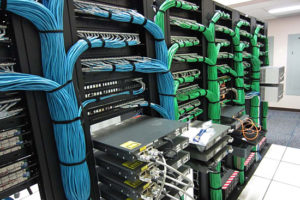
In the last 20 years, the enterprise cable market has witnessed the tremendous transformation in terms of the growth, commoditization, new technologies, and evolving standards. In fact, this network infrastructure is the backbone for data storage and voice transmission. To obtain an overall view of the structured cable market, General Cable conducted a study on end-users, consultants, engineers, contractors, and installers. The aim of the study was also to understand how the last two decades of market development will shape the future.
The advancement in technology has made the latest communication systems power hungry, which means they need high-speed connections, high security, fast computers and instantaneous response. These demands of the organizations can be catered only by the structured cabling systems. Therefore, in the recent times, the companies are emphasizing on the need of switching over to the structured cabling system.
The Past and the Future of Copper Cabling structure
Several studies conducted on cable market revealed that in 2005, the US category cable market peaked to 7 million feet – especially in North America. However, the growth rate saw a steady decline during the next 5 years – between 2005 and 2010 – due to the economic crisis. Post-2010, the market managed to remain remarkably consistent at 5 billion feet. Furthermore, the increase in data needs has brought the costs down. In fact, there has been a steady and dramatic shift from Cat 3/ Cat 5 to Cat 6. This shows that structured cable systems are capable of innovations, keeping up with new technology, and developing products. Though copper category cable market is expected to be stable, the expected growth rate is between 0% and -2%. The introduction of the structured cabling in the late 90s has made companies realize their need to get their cabling structure standardized. Structured cabling has come a long way and commercial information transmission is addressed in the most customized and organised manner.
Wireless technology:
Wireless technology is the expected to advance and continue to support greater bandwidth requirements, especially in residential environments. To those involved in the installation, maintenance of structured cabling systems, and designing, the features of wireless networking may look beguiling. Wireless technology helps in avoiding the hassles of running cables to remote locations. As wireless technology can serve admirably numerous applications, in the recent years, it has been seeing a gradual but consistent shift in data consumption by the end users from hard-wired to mobile. These factors have led to a downward pressure of 3% per year on category cables due to wireless growth. However, there are also pitfalls of wireless networking. Though Institute of Electrical and Electronics Engineers (New York) has set the standard for wireless networking – IEEE 802.11b, a complete interoperability among all WLAN vendors have remained unattained. Additionally, wireless conversions will dampen the security concerns.
PoE:
The evolution of PoE over the last decade to provide a viable powering option for a wide range of applications have given birth to basic categories of PoE: standards compliant low power (802.3at) and non-standard applications with higher power delivery. The ever increasing PoE standards and non-standard high-powered applications can be met by:
- Large-gauge conductors for high-powered applications which reduces the impact on the transmission, reduces the HVAC loading within the premises, and allows the operation in higher temperature without exceeding the cable temperature rating.
- Jacket Temperature rating beyond standard requirements: This offers higher protection against increased operating temperature by surpassing the industry standard of 60°C and preventing material degradation from elevated temperatures over extended periods.
The advent of fiber-optic cable has helped the communication technology to take a giant leap. But has it proved to be a viable alternative? According to a survey, the majority chose wireless over fiber, when asked about employing non-copper cable solutions. The complexity of fiber termination and cost to convert optical to electronic signal were cited as major concerns.
In conclusion, it is believed that future shifts from copper to new technologies will be slower, on the margins rather than systemic. Also, the copper cable market is expected to be stable with a range of year over year growth between 0% and -2%.
Facts about cabling systems:
- Copper cabling has been on decline since 2006
- However, nearly 90% of commercial users employ copper category cables as their main choice for delivering data.
- In last 5 years, Wireless LAN (WLAN) connections, which require less copper cabling, have tripled in the past 5 years. The WLAN connection is approaching nearly 80% of the installed Ethernet Base.
- Only 5% of the horizontal structured cable uses fiber, despite superior transmission speeds.
PoE applications such as HDBaseT and Nurse Call Systems that pull more power will continue to grow.
The post Know All about the Future of Structured Cabling Systems appeared first on General Computer Consulting, LLC.
]]>The post Machine Learning Dynamics: The Advent of the Modern Enterprise Software appeared first on General Computer Consulting, LLC.
]]>
Enterprise software is on its way to witness a major makeover, which is destined to make the transition to the software as a service (SaaS) model a smoother and simpler process. This makeover is most likely to be induced by machine learning. Machine learning will allow computers to undertake real-time data mining and processing tasks and to create predictive models that will help companies in processing meaningful insights and identifying patterns. Simply put, machine learning has the potential to trigger endless possibilities.
With machine learning solutions, you can source data from both within and outside of your enterprise without having to employ human resources to fill out web forms. The machine learning software is effective enough to source data from unstructured systems, such as calendars and emails, and also from voice mail systems and call centers. The data collated and organized by the software will allow managers to get insights and predictions and to make critical business decisions.
Issues that we have been facing with traditional Enterprise Software
With machine learning, you can get rid of many issues that are associated with traditional enterprise software. First off, the quality of data captured and stored by the traditional software is similar to the quality of data acquired through human resources. Given the fact that most sales executives do not really bother to update the CRM information on time, the process tends to become prolonged and unnecessarily complicated with numerous sales calls and spreadsheets that have to be updated with pipeline-related information.
Secondly, traditional enterprise software, built on relational databases, fail to present better longitudinal perspectives of information, which is why they are less capable of generating insights. This is the reason why many companies choose to depend on large data warehouses that obtain large amounts of data from enterprise applications. With such an approach, managers have to wait for weeks before they can use the data in an appropriate manner to create insights. It is important to note that static, human-defined rules dictate the functioning of traditional enterprise systems and such rules become obsolete as businesses continue to undergo transformations with time.
The machine learning revolution is most likely to be brought by next-gen specialists
It is quite surprising to note that the existing software leaders are not expected to fuel this revolution. Enterprise software veterans Dave Duffield, Marc Benioff, and Aneel Bhusri were associated with the SaaS wave, but this new wave is created by creative thinkers who do not belong to the traditional software development genre. Instead, this new wave is more likely to be created by professionals from Google, Facebook, and Twitter. This is mainly because of the fact that the development of machine learning software requires expertise and skill sets that are entirely different from the ones required to develop traditional enterprise software. As a matter of fact, consumer machine techniques have been used for years by consumer Internet players for data analysis purpose.
New Leaders in the Machine Learning Landscape
The business landscape is on its way to be transformed by the new wave of enterprise applications that are fuelled by machine learning. The revolution will have a tremendous impact on key business areas including:
- Human Resources: New machine learning-powered enterprise solutions have the potential to transform applicant tracking systems into back-end solutions and to support the actual task of recruitment. Gild, Entelo, and Concept Node has deployed machine learning models to screen and recruit appropriate candidates and to promote effectiveness in the functioning of the internal teams.
- Sales: The new enterprise solutions allow sales managers and account managers to receive alerts about risk situations so that they can take timely actions. These alerts are insights that allow managers to plan ahead of time. Clari, Inside sales, Gainsight, and Lattice have been using machine learning and data science-based solutions to identify sales opportunities and risks and to generate sales forecasts.
- Finance: The machine learning powered solutions provide insights, allowing managers to identify opportunities to drive profit and growth and to promote efficiencies. Trufa, Adaptive Planning, and Anaplan support their financial planning function through solutions that promote predictive analysis.
- Marketing: Persado and Captora are two companies that have deployed data science to customize their content to suit the needs of their prospects.
So what’s next?
The introduction of the new enterprise models brings mammoth opportunities to the entrepreneurs and the investors to capitalize on the innovations to exploit growth and return-on-investments. According to BCC Research, the machine learning market is predicted to grow to $15.3 billion by 2019, with the predictive analysis software being listed in the early-growth category.
To sum up, the machine-learning powered enterprise models are on their way to replace the legacy systems, thereby instilling a modern makeover to how businesses operate in the present times.
The post Machine Learning Dynamics: The Advent of the Modern Enterprise Software appeared first on General Computer Consulting, LLC.
]]>The post Reliability in Data Storage: Challenges and Solutions appeared first on General Computer Consulting, LLC.
]]>The use and potential misuse of large volumes of data are a matter of concern for the end users and the vendors alike. Let’s take a look at the challenges and the best possible solutions to the same:
- Adopting right approaches: A part of a robust business continuity plan is to have a backup plan in place if the data gets corrupted or accidentally deleted. Avoiding data corruption or restoring the correct data is possible only through the adoption of proper methods in memory elements and arrays. Latches and flip-flops make an ideal choice for preserving the correctness of the data stored in memory elements. ECCs accommodates simple single error correcting (SEC) or double error detecting (DED) codes to correct more than a single error. These codes are important for scaled-down technologies and high-density memory arrays.
- However, adoption of these powerful ECCs brings along high area overhead and a significant impact on performance. This is mainly due to the storage of a greater number of check bits and more complex encoding and decoding structures.
- Memory Interleaving: There are advanced ECCs to cope up with multiple upsets. One of the most common approaches to deal with multiple errors is to use interleaving in the physical arrangement of memory cells. This helps in segregating the cells that belong to the same logical word. This can be adopted together with SEC/DED codes to protect memory arrays against MBUs. Interleaving cannot be used for register files or small memories because its use may have an impact on floor planning access time and power consumption. Though interleaving generally requires complex and expensive decoding circuitry, it cannot guarantee error correction when the same memory word is affected by two errors.
Let’s take a look at the write-ups that provide a comprehensive reference for the theoretical and practical aspects of innovative approaches for reliable data storage.
- Accurate Model for Application Failure Due to Transient Faults in Caches: This research conducted by Mehrtash Manoochehri and Michel Duboise proposes a solution for the evaluation of cache reliability, in the presence of multi-bit faults, expressed in terms of the failure in time (FIT) metric. In this research paper, authors introduce the concept PARMA+ model which enables FIT rate estimates under all possible sequences.
- High Performance Robust Latches: This research paper, co-authored by Martin Omana and Daniele Rossi, recommends a high-performance robust latch called HiPeR latch. This is insensitive to TFs affecting its internal and output nods regardless of the energy of the radiation particle. The research article also discusses the modified version of the latch and its benefits.
- Concerting: Squeezing in Cache Content to Operate at Near Threshold Voltage: In this research article, Alexandra Ferreron and her colleagues have proposed that large SRAM structures, such as the last-level cache (LLC), enable operation at low voltages with conventional SRAM cells.
In conclusion, it can be summarized that electronic objects can certainly exchange a huge amount of data as the data-exchange is enabled by the IoT. However, storing it in a reliable way will be challenging. Emphasizing the major challenges in reliable data storage and stimulating further research in the field are the needs of the hour.
The post Reliability in Data Storage: Challenges and Solutions appeared first on General Computer Consulting, LLC.
]]>