The post Data Encryption… GOOD or BAD? appeared first on General Computer Consulting, LLC.
]]>
With different cyber attacks from all over the web, different channels, and in many forms... it is imperative that protection must be in place. Passwords, multi factor authentication, antivirus and malware protection are some of the ways to protect your data from hackers. However, with all these efforts in securing your data there's still a high risk that your data can and will be compromised. On the other hand, with DATA ENCRYPTION, there are absolute advantages in securing your data.
WHAT IS DATA ENCRYPTION?
Data encryption is a security method where the data is being encoded in compounded code and can only be accessed or decrypted with the correct code. Encrypted data appears disorder and illegible.
With encrypted data in place, you will worry less about your privacy. Encryption will keepunwanted visitors/users from accessing your sensitive data.
WHY DATA ENCRYPTION IS IMPORTANT?
Computers today are so vulnerable with cyberthreats and different kinds of attacks. It is very important that you know how to handle, secure, and protect your business' sensitive data from hackers. Encryption is important and cannot be understated due to it's high level of significance keeping your data from cybercriminals. The process of data encryption ensures your files can not be penetrable and compromised.
WHAT DATA SHOULD BE ENCRYPTED?
- passwords
- bank accounts
- personal information (social security number, health details, phone numbers, address)
- other confidential data
Often securing one's data is disregarded. Most people think because they backup their data up it doesn't need to be secured. . However, backing up data doesn't mean hackers can't get into it. Data encryption is your best weapon to have your data intact and secured.
ENCRYPTION STATISTICS YOU NEED TO KNOW:
- Cost of a data breach by number of records lost.
- As per Statista, in 2020, 56% of enterprise respondents said their internet communications had extensive encryption deployed. 27% had only partially deployed encryption for their internet communications.
- According to Varonis, a staggering 53% of companies left over 1,000 sensitive files and folders unencrypted and open to all of their employees
- Cybersecurity Ventures estimated over 300 billion passwords worldwide would need to be protected in 2020.
- A Varonis 2021 financial data risk report found that around 21.43% of companies worldwide have 1500+ account passwords that don’t expire.
How can we help?
Data encryption is vital in the cybersecurity world. To ensure your data is safe and protected start the process of the encryption now. Paul General, CEO/Cybersecurity Specialist, and his team at General Technologies know the importance of protecting your confidential data and we know exactly the service that is suitable for your business needs.
Contact us at 412-853-3708 and email at info@gcchelp.com
The post Data Encryption… GOOD or BAD? appeared first on General Computer Consulting, LLC.
]]>The post 9 Cybersecurity Tips Every Business Should Follow appeared first on General Computer Consulting, LLC.
]]>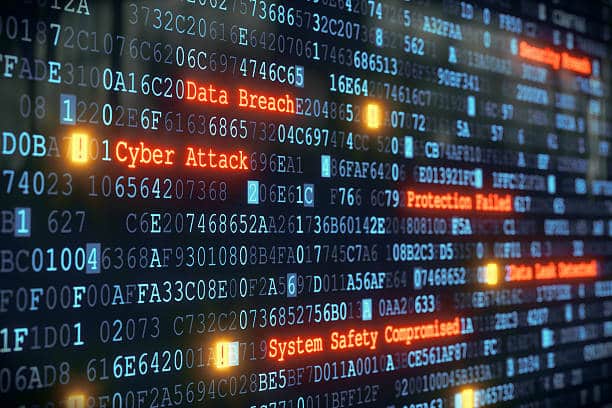
A massive global shift to remote working environments has created an open season for cybercriminals. No business—big or small—is safe. Small and medium businesses (SMBs) seemingly have a target on their backs, so strengthening your company’s security posture is essential right now.
There are ways to protect business data against ransomware attacks.Here are 9 tips to help yourbusiness boost resilience to cyber attacks:
- Conduct a security risk assessment. Understand the most critical threats to your business, like system failures, natural disasters as well as malicious human actions, and determine the impact they may have on your company.
- Train your employees. Conduct employee awareness training across your entire workforce to educate users on common scams and avoidance techniques.
- Use multiple layers of protection. Implement a password policy that requires strong passwords and monitor your employee accounts for breach intel through dark web monitoring.
- Keep software up to date. Unpatched or out-of-date software will allow some kind of threat to breach your security.
- Create straightforward cybersecurity policies. Write and distribute a clear set of rules and instructions on cybersecurity practices for employees.
- Back up your data. Daily (or more frequent) backups are a requirement to recover from data corruption or loss resulting from security breaches.
- Enable uptime. Choose a powerful data protection solution that enables “instant recovery” of data and applications.
- Know where your data resides. The more places data exists, the more likely it is that unauthorized individuals will be able to access it. Use data discovery tools to find and appropriately secure data along with business-class Software-as-a-Service (SaaS) applications that allow for corporate control of data.
- Control access to computers. Each access point poses an individual risk, so limit employee access to specific data they need to perform their jobs. Plus, administrative privileges should only be given to trusted staff.
Partnering with a managed service provider like General Technologies will help address and ease your cybersecurity concerns. Working with MSP will give you access to quality advice on what you need to protect your organization in the fight against cybercrime. Paul General, CEO and Cybersecurity Specialist is ready to help keep your business afloat with the expertise and help of his team.
To learn more about our services, contact us today.
The post 9 Cybersecurity Tips Every Business Should Follow appeared first on General Computer Consulting, LLC.
]]>The post Zero Trust: How To Implement It To Your Business? appeared first on General Computer Consulting, LLC.
]]>
What is ZeroTrust?
Zero Trust security means that no one from inside or outside of an organization is trusted by default to have access unless verification method is completed. Zero Trust is a method to secure business networks and infrastructure. This tool helps companies in different aspects by securing data for remote workers or hybrid environments and ransomware threats.
Moving to a zero trust model gives organizations many benefits like stronger access controls and streamlined security operations. It’s also the preferred architecture under many industry regulations.
6 Tips For Implementing Zero Trust:
- Enable two-factor authentication (2FA) for every user. Identity and access management (IAM) is the foundation of zero trust security, and 2FA is the cornerstone. It also stops 9% of cyberattacks.
- Maintain an access control policy. Start with identifying sensitive data and systems, then prioritize access to them. Almost 90% of employees said that they still had access to their former employers’ sensitive company data.
- Make access control easy with single sign-on (SSO). This is a multi-benefit tool that makes it easier to add and remove access to applications and data and maintain regulatory compliance.
- Only store passwords in secure password vaults. Enhancing security for all passwords is a good idea, but it’s especially important for privileged administrator or executive credentials.
- Dark web monitoring helps stop credential exposure.The average organization has 17 sets of username and password logins exposed on the dark web.
- Invest in security and compliance awareness training. When users are armed with the knowledge they need to understand security, they make fewer mistakes and take policies more seriously.
As the result of zero trust, your organization can ensure that all access is met with the highest form of security. Paul General and the rest of dedicated team from General Technologies can help your organization set up or upgrade your existing cybersecurity service.
CALL US NOW to find out!
The post Zero Trust: How To Implement It To Your Business? appeared first on General Computer Consulting, LLC.
]]>The post What Is Security Posture And How Vital It Is appeared first on General Computer Consulting, LLC.
]]>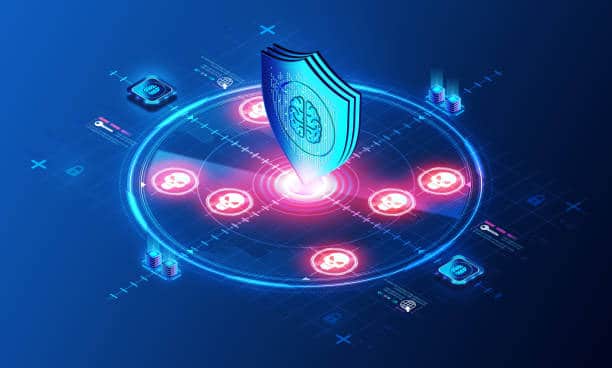
Security posture refers to the overall cybersecurity strength of one organization. It is determined by the ability to respond, predict, and provide an immediate response to different kinds of cyber threats.
An organization's security posture includes its network, network security, data security, information security, and internet security. When there are vulnerabilities in these categories, there is much greater cyber risk.
How strong security posture save the companies?
With a strong security posture, a company will be able to easily identify any kind of threat. Once the threat is detected, they can begin to execute an immediate solution. But with the ever-changing innovations in our technology, threats, and cybercriminals are putting in a lot of effort to keep up and find
The 10 Blind Spots In Your Security Posture:
- Password Issues: Most organizations have instances of weak, default, and reused passwords. In these cases, passwords need to be fixed and made stronger.
- Encryption Issues: Unencrypted or improperly encrypted data will bring real security risks to your organization.
- Misconfigurations: When there are misconfigurations in application and OS settings, there are no mechanisms in place to look for instances and fix issues.
- Denial of Service Fragility: With this blind spot, the network is not designed for availability under a (distributed) denial-of-service attack or a compromise of important assets.
- Malicious Insiders: These kinds of insiders can attack when there is inadequate visibility and a lack of controls. Without proper detection and prevention, these actors can work to exfiltrate and destroy key data.
- Flat Networks: Individual system compromises easily turn into major data breaches if there is no network segmentation.
- Poor Identity and Access Control: Manual provisioning and de-provisioning process for user access control makes it easy to lose track of who had access to what.
- Phishing, Web, and Ransomware: Do you know which of your users introduce the most cyber risk exposure to your organization due to their browsing behavior?
- Criticality of Unpatched Systems: Timely security patching is very challenging, due to the volume of new CVEs/ However, not everything in your network is equally important.
- Non-Traditional Assets: The foundation of any visibility program is an accurate inventory, including non-traditional assets such as BYOD, IoT, mobile assets, and cloud services.
A security posture assessment helps organizations no matter the size is in keeping their business protected and shielded from various cyber attacks. Paul General, CEO/Cybersecurity Specialist, and his team at General Technologies will ensure that your cybersecurity plan is in place, protecting your network, data, applications, and everything in between.
The post What Is Security Posture And How Vital It Is appeared first on General Computer Consulting, LLC.
]]>The post Risk Assessment: Checking Out Your Multi-Factor Authentication Security appeared first on General Computer Consulting, LLC.
]]>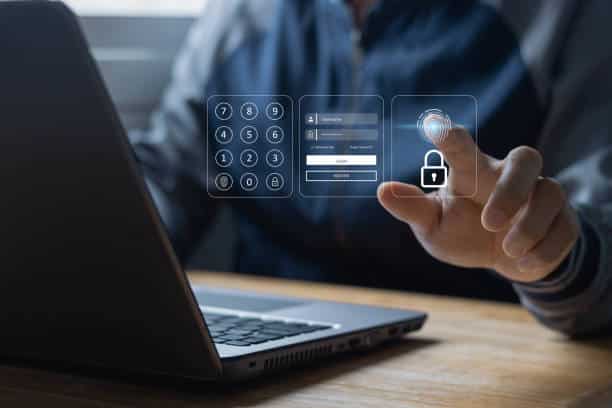
According to a cybersecurity report, 80% of all hacking involves stolen user credentials or poor password hygiene. In total over 600 million passwords have been exposed through data breaches. Multi-factor authentication (MFA) adds extra layers of security that will reduce your risk significantly. But unfortunately, MFA can still be compromised.
Here are some facts to guide you in assessing your network security:
FACT 1 (HIGH RISK): How do cybercriminals bypass login credentials?
- Password spraying
- Phishing
- Prior data breach / reused passwords
- Password reset
- Local discovery
Adding MFA functionality to authenticate your login credentials improves network security. It works by adding multiple layers of security before logging into your accounts. Similar to MFA, 2FA (2-factor authentication) works by verifying the user using two methods. MFA is the top recommendation because it requires you to prove your identity multiple times.
FACT 2 (MEDIUM RISK): What do cybercriminals do after bypassing the MFA?
While MFA decreases the amount of risk in comparison with single-factor authentication, your network is still vulnerable to multiple bypassing authentication security:
- Replay attacks
- SIM swapping
- Social engineering
- Phishing
- Vulnerabilities in online pages handling MFA authentication
FACT 3 (LOW RISK): Can cybercriminals breach a physical security authentication?
Fast Identity Online (FIDO) Authentication is the strongest standard-based authentication method available. It is a set of open technical specifications that define user authentication mechanisms that reduce the reliance on passwords.
Even though FIDO is present as an authentication key, there’s still a slight risk through:
- Replacement of hardware
- Outdated hardware keys
- Limited supply - not all employees are provided
- Cost of the hardware keys
Businesses are struggling to keep their heads up against cybercriminals. The more we pay attention to the risk, the more cybercriminals create new advancements and tactics to trick innocent business owners. Paul General, CEO and Cybersecurity Specialist at General Technologies offers a Cybersecurity Risk Assessment program that will help businesses assess the current situation of their network and detect any rising threats.
Get our FREE DEMO of Cybersecurity Risk Assessment and strategize your network security NOW!
The post Risk Assessment: Checking Out Your Multi-Factor Authentication Security appeared first on General Computer Consulting, LLC.
]]>The post How To Keep Your Confidential Data Safe? appeared first on General Computer Consulting, LLC.
]]>
Each day, we are becoming more vulnerable online as cybercriminals are creating advanced strategies and tactics to defeat us.
Organizations and individuals must implement cyber safety to protect their networks and systems from all kinds of cyberattacks. IT services and IT consulting handled by an outsourced organization, like General Technologies, will help you avoid downtime and protect your business data.
Tips to keep your confidential data safe:
- Set complex passwords: The first line of security for your sensitive information is your password. Ensure your passwords are lengthy, challenging, and specific to you.
- Don't share too much on social media: Hackers may utilize information about your life to respond to the challenge questions on different accounts. Never share your full name, SSN, address, phone number, PIN, or account numbers on websites that are accessible to the general public.
- Be wary of free WiFi: These put you in danger of having your online activities tracked by others, and some malware can be transmitted via WiFi.
- Invest in antivirus software: Installing a reliable antivirus tool on your computer can further strengthen your protection. There are many basic and free antivirus programs available, along with more advanced paid options that add additional protection options.
- Make a data backup: Whether you go for hardware (external hard drive) or software (cloud-based), be sure your data is backed up to a secure location. This lessens the possibility of ransomware, in which hackers hold your data captive in exchange for a fee.
Data breaches should be taken very seriously by organizations and individuals. Data breaches involve losing personal information, business confidential data, and in some cases, even selling your data to the dark web. Paul General, our CEO/Cybersecurity specialist, is experienced in servicing different kinds of companies and will work to build a strong cybersecurity culture at your small or medium-sized business.
Don't let cybercriminals ruin your business. Get your cyber strategy in line now.
The post How To Keep Your Confidential Data Safe? appeared first on General Computer Consulting, LLC.
]]>The post What is Data Breach? How Does One Happen? appeared first on General Computer Consulting, LLC.
]]>
Because of various innovations in technology, we are becoming more dependent on it, especially with everything accessible on the internet like online shopping, bank transactions, and more. One thing that comes with online transactions is the idea of becoming more vulnerable to threats and cyber attacks. Data breaches are just one of the most common threats everyone should be aware of. Data breaches are not just temporary or human error, they can lead to more serious and sensitive damage to your life.
Businesses, organizations, government agencies, and individuals can have the same experience in terms of data breaches. For businesses and other organizations, more complications may arise once sensitive information has been exposed.
Without proper knowledge of data breaches, a massive effect of data breaches can be expected.
How do Data Breaches happen?
There are many objects that can lead to data breaches. Some popular cases result in human error, such as:
- Lost or stolen devices - Unprotected and unencrypted smart devices such as smartphones, laptops, and external hard drives may contain confidential information.
- Malicious insider - This person will purposely access or share data that will lead to getting your personal and sensitive information. These kinds of people can do harm to businesses in more serious ways.
- Accidental insider - This can be a friend or a co-worker who accidentally accesses your files without any authorization. The files that have been viewed by an unauthorized person are considered as data breach.
- Cybercriminals - These are hackers who are using a certain program to gather information from a company or individuals.
How To Recover :
- Know exactly what information has been stolen
First, know exactly what information that hacker has stolen from you. Would it be just a plain name and address? Or more sensitive information such as birthdate, credit/debit card, Social Security Number, or other bank details? Report it to the proper department/company.
- Create new and stronger passwords
Setting up new and stronger passwords must be the next thing you must do after a data breach. If you have online accounts that you think have been hacked, immediately change your password to a more complex but easy-to-remember password.
- Update your security system
Check if your anti-virus software is updated. Install a firewall if needed, it will increase your network security by blocking malicious sites and other types of viruses.
- Consult a cybersecurity expert
It is always better to seek assistance from cybersecurity experts and ask for better solutions and recommendations on what kind of network security fits you.
Do not undermine hackers and cybercriminals, they're growing and getting smarter day after day.
Our best defense against cybercriminals is the knowledge, awareness, and program that will give us the best cybersecurity service.
For more details on our Cybersecurity services, please click this link: https://Generalmanagedservices.com/cybersecuritymonth or you can call us at 412-853-3708, email us at info@gcchelp.com
The post What is Data Breach? How Does One Happen? appeared first on General Computer Consulting, LLC.
]]>